Why Nobody Cares What You Do (And What to Say Instead)
Most business owners lead with the wrong thing.
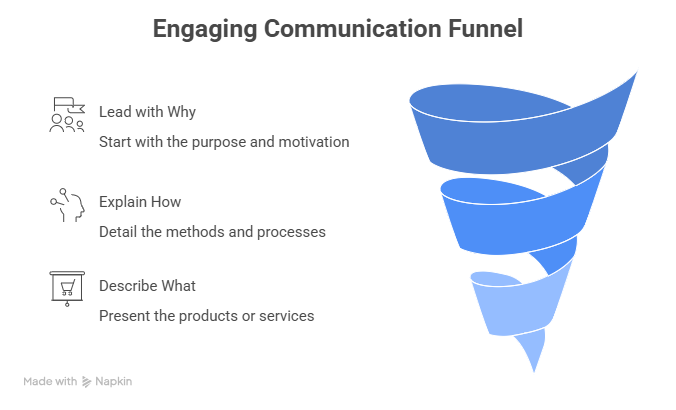
They open with what they do. Then they explain how they do it. And if you’re still listening, somewhere near the end, they might get to why they do it.
But by then, you’ve already moved on.
Here’s the problem. The human brain isn’t wired to receive information in that order. It’s wired for Why → How → What. Not the other way around. When you lead with what, you’re asking someone’s logical brain to care before their emotional brain has been given a reason to.
And the logical brain doesn’t commit. The emotional brain does.
Start With the Enemy
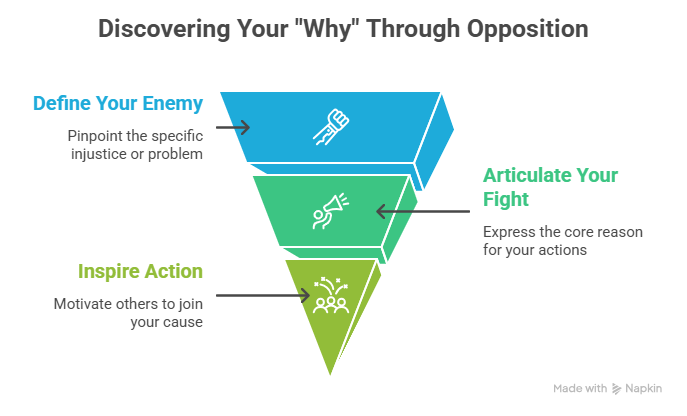
Before you can find your why, you have to find your enemy.
Not a competitor. Not a difficult client. The thing that genuinely makes you angry — the broken system, the preventable problem, the injustice that keeps happening in your industry while everyone looks the other way.
Your enemy is the reason you do what you do.
A digital health company I work with could tell you all day long about their software platform and what it does for employer healthcare costs. But when they say “we have a sickness system, not a healthcare system — one that either wants to cut you or prescribe you” — that lands differently. That’s not a feature. That’s a fight worth joining.
A culture consultant I know could describe her mental model methodology and her process for reducing turnover. Or she could say “I’ve watched companies hemorrhage $20 to $30 million a year in turnover because leaders refused to evolve past the mental models that were running their people out the door.” Now you’re not buying a consulting engagement. You’re joining a movement.
That’s the difference between what and why.
The Enemy of My Enemy Is My Ally
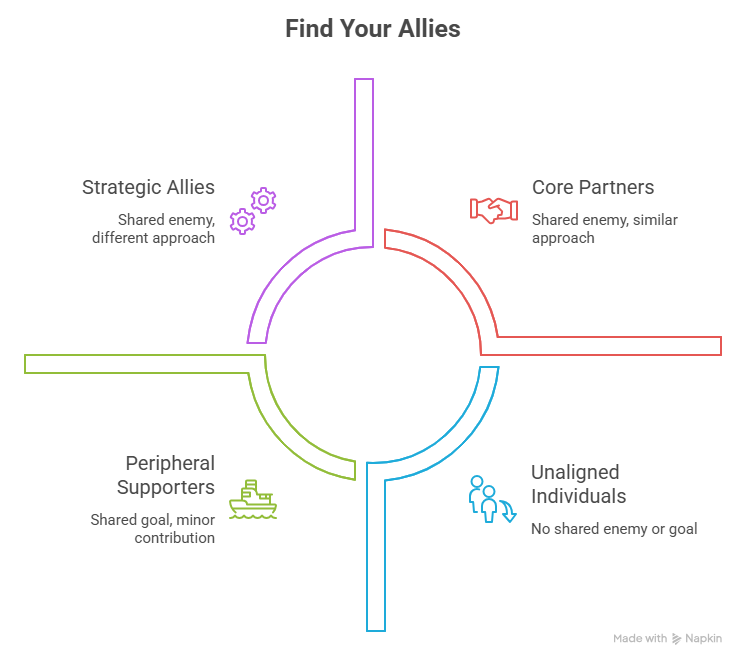
Once you’ve defined your enemy clearly, something unexpected happens — you start seeing allies everywhere.
The enemy of exploding healthcare costs isn’t just a digital health platform. It’s the strategic broker who actually wants to lower claims instead of profiting from them. It’s the wellness vendor. It’s the HR director who’s tired of explaining premium increases to the CEO. Suddenly your go-to-market isn’t just about finding customers. It’s about finding people who are fighting the same war.
The enemy of organizational dysfunction isn’t just a culture consultant. It’s the recruiter who keeps filling the same position for the same client and knows something is wrong. It’s the QA manager watching scrap rates climb. It’s the workforce development firm trying to reskill operators no one will retain. Different symptoms. Same disease.
When you define your enemy, you find your rally point. When you find your rally point, you find people willing to carry the same flag. And when you find those people, your pipeline stops being something you grind through — it becomes something you build together.
That’s not networking. That’s leverage.
How to Build Your Why
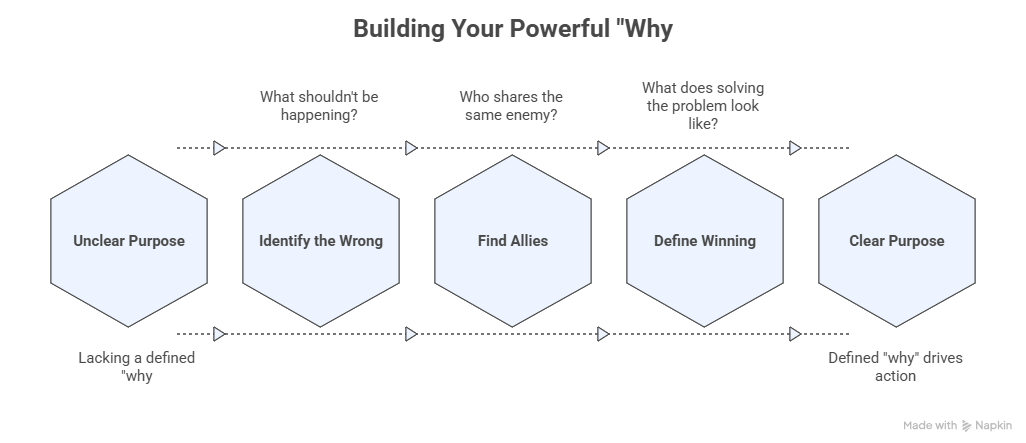
Three questions. Answer them honestly.
1. What keeps happening in your industry that shouldn’t?
Not a market gap. Not an opportunity. A genuine wrong that you’ve seen up close and can’t stop thinking about.
2. Who else is fighting the same fight?
These aren’t just referral partners. These are allies. They don’t have to agree with you on everything — they just have to share the enemy.
3. What does winning look like?
Not revenue. Not headcount. What does the world look like if you actually solve the problem you’re fighting?
Your answers to those three questions are your why. And your why is the most powerful thing in your pitch, your website, your email, and your LinkedIn.
The Bottom Line
Nobody buys what you do. They buy why you do it.
And nobody joins a coalition around a product. They join a coalition around a cause.
Define your enemy. Find the people fighting the same battle. Lead with why. And watch how differently people respond when you stop explaining your methodology and start talking about the thing that made you start in the first place.
The battle is real. The question is whether your messaging shows it.
So let me ask you — what’s your enemy? And does your pitch make it clear?